
RESOURCES / SOURCING & PROJECT SUPPORT
Jewelry Components Glossary
Identify jewelry parts by their function, connection and dimensions. Use these definitions to build a component list and describe what each part must do.
In this guide
- What Jewelry Component Terms Help You Specify
- Jewelry Findings and Connecting Components
- Beads, Charms, Pendants and Decorative Elements
- Chains, Clasps and Closure Terms
- Earring, Necklace, Bracelet and Ring Components
- Cabochons, Gemstones, Crystals and Settings
- Material, Color and Finish Terms
- How to Use Glossary Terms in a Component Inquiry
- Find the Right Component or Project Route
What Jewelry Component Terms Help You Specify
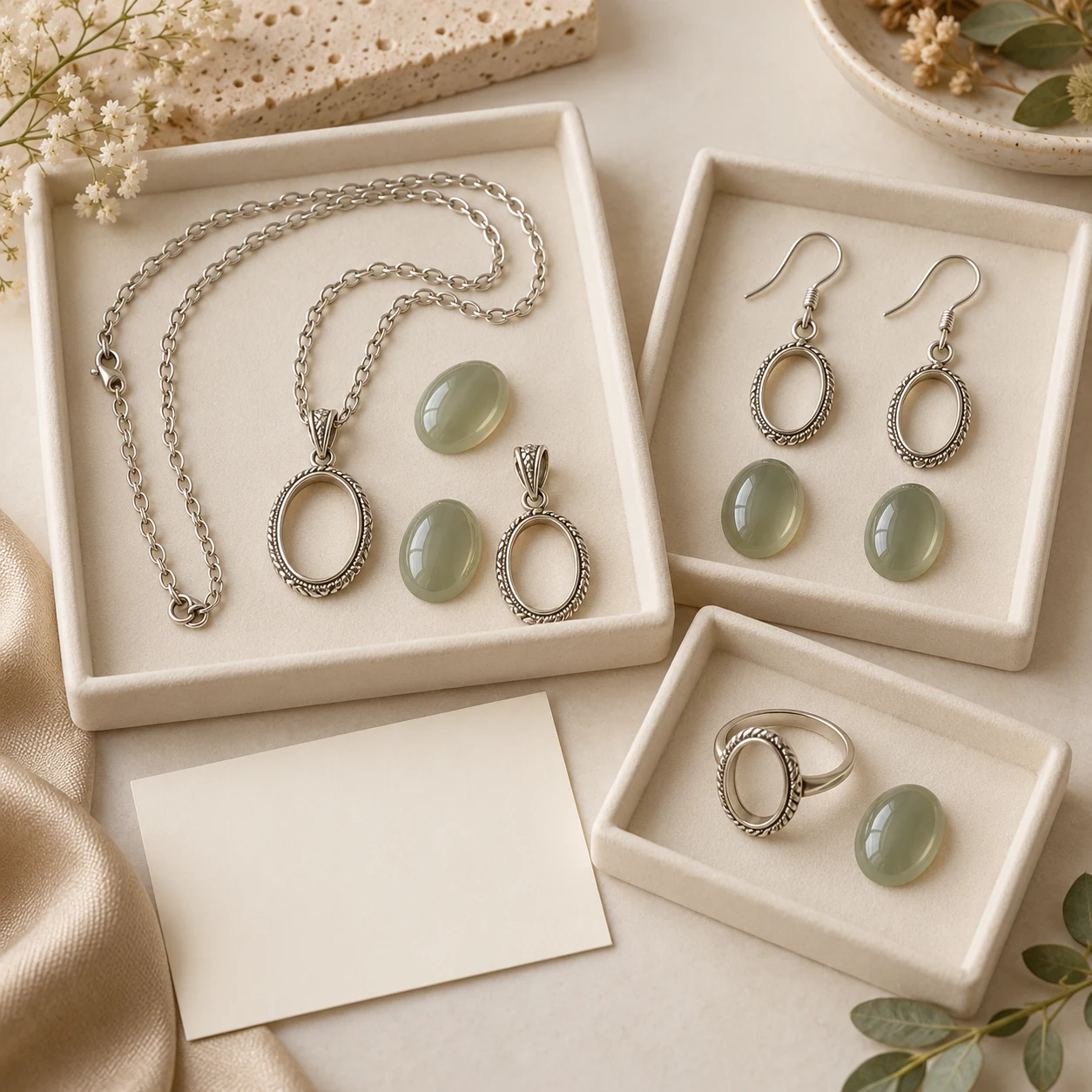
Name the part, function, position and attachment, with dimensions, materials, finish and adjoining parts. Use a photo, drawing or sample reference when terminology is unclear.
Jewelry Findings and Connecting Components
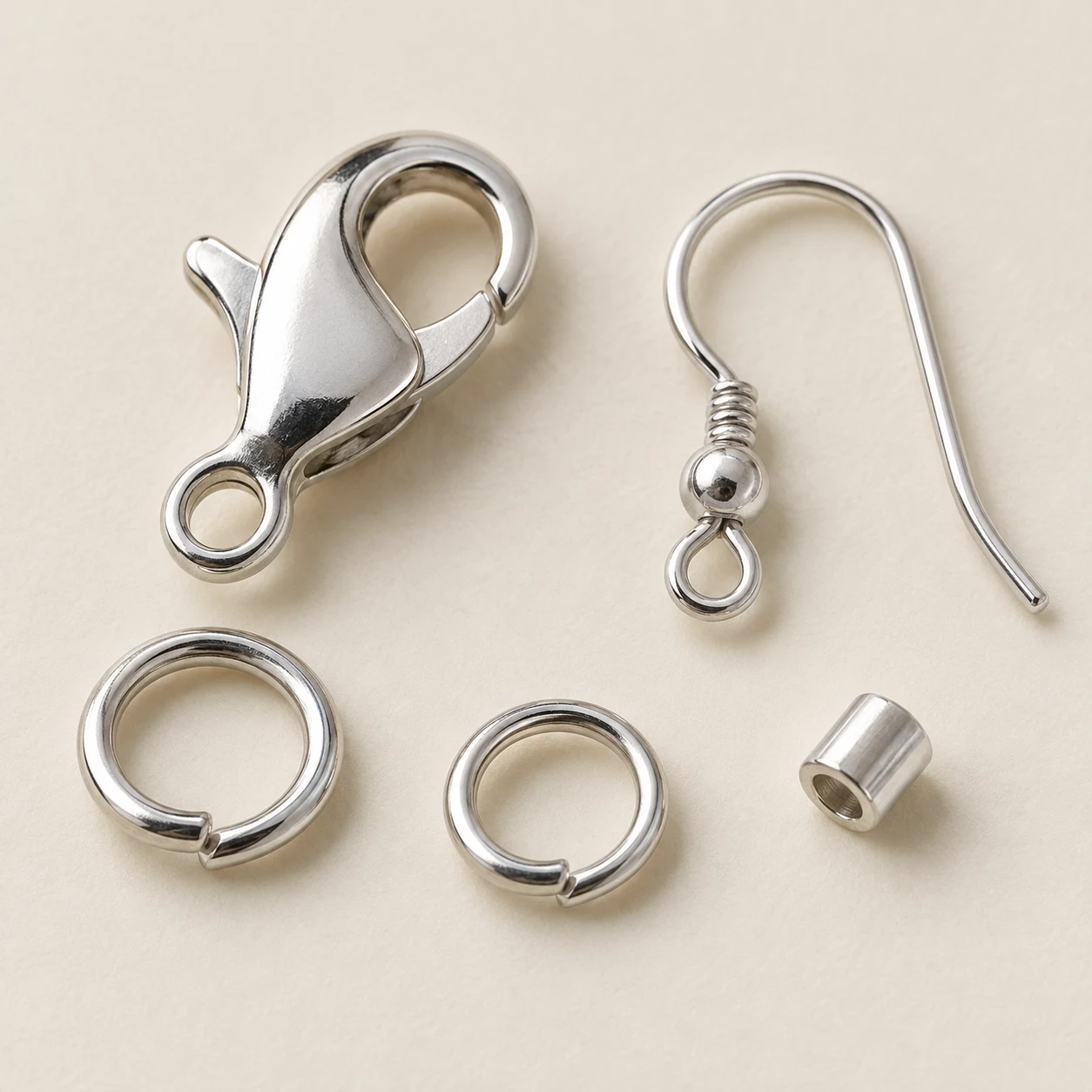
Findings are small functional or structural parts, including jump rings, connectors, end pieces and attachment components. Confirm the required type and availability for your project.
Findings, Components, Parts and Supplies
Findings are functional or structural parts. Components include structural and decorative elements; parts is a general synonym. Supplies may also include making materials. Terms overlap, so identify the specific part and its function.
Beads, Charms, Pendants and Decorative Elements
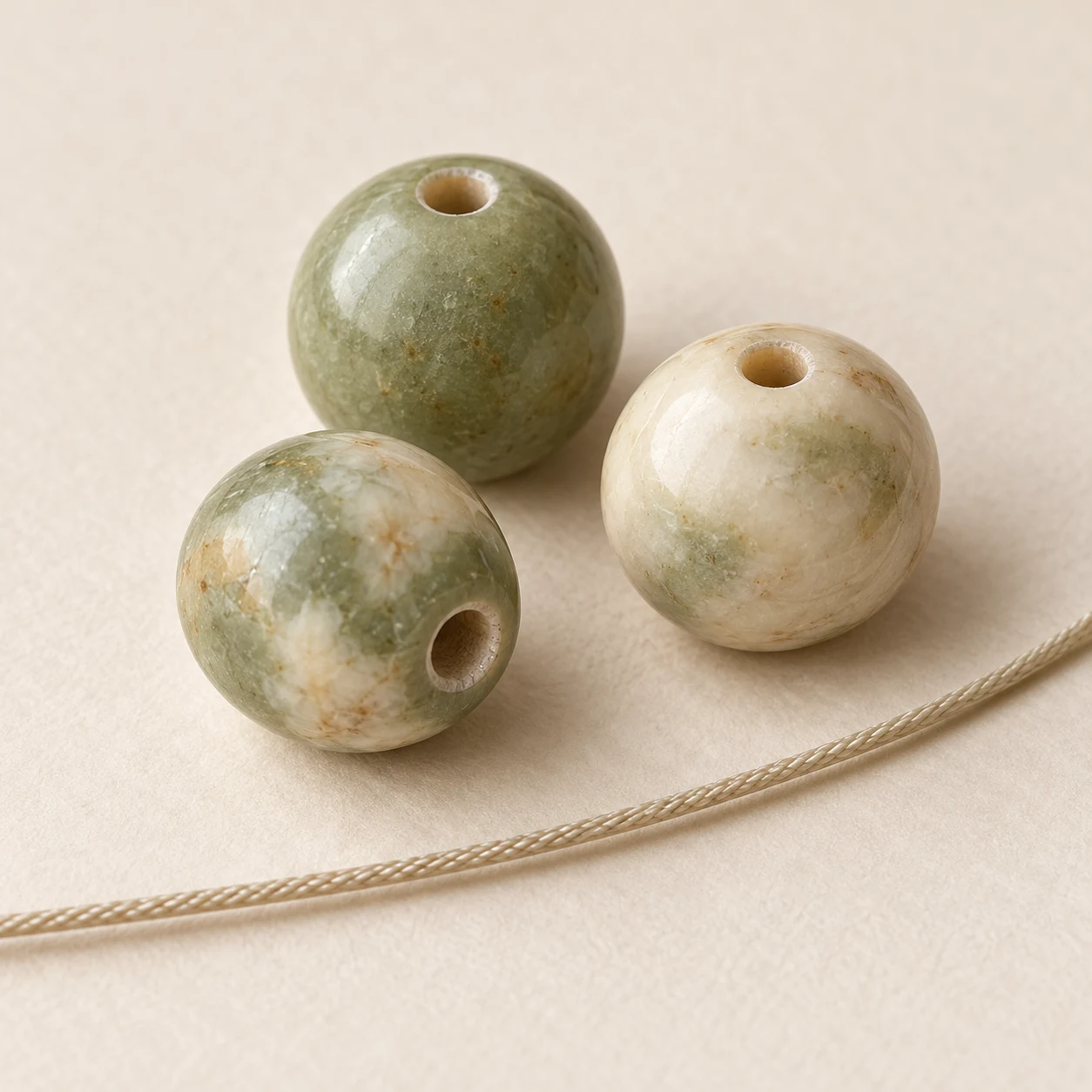
A bead usually has a hole for threading or attachment; specify shape, dimensions, hole, material and surface. Charms add attached decoration; pendants hang, often as focal elements. These terms overlap, so describe placement and attachment.
Beads, Crystals and Pearls
Bead describes form and use, not material. Crystal may mean crystalline material or decorative glass. A pearl is an organic gem formed by a mollusk; simulated pearls imitate its appearance. Crystals and pearls may serve as threaded beads. Verify material identity and relevant natural, synthetic, treated or simulated status.
Chains, Clasps and Closure Terms
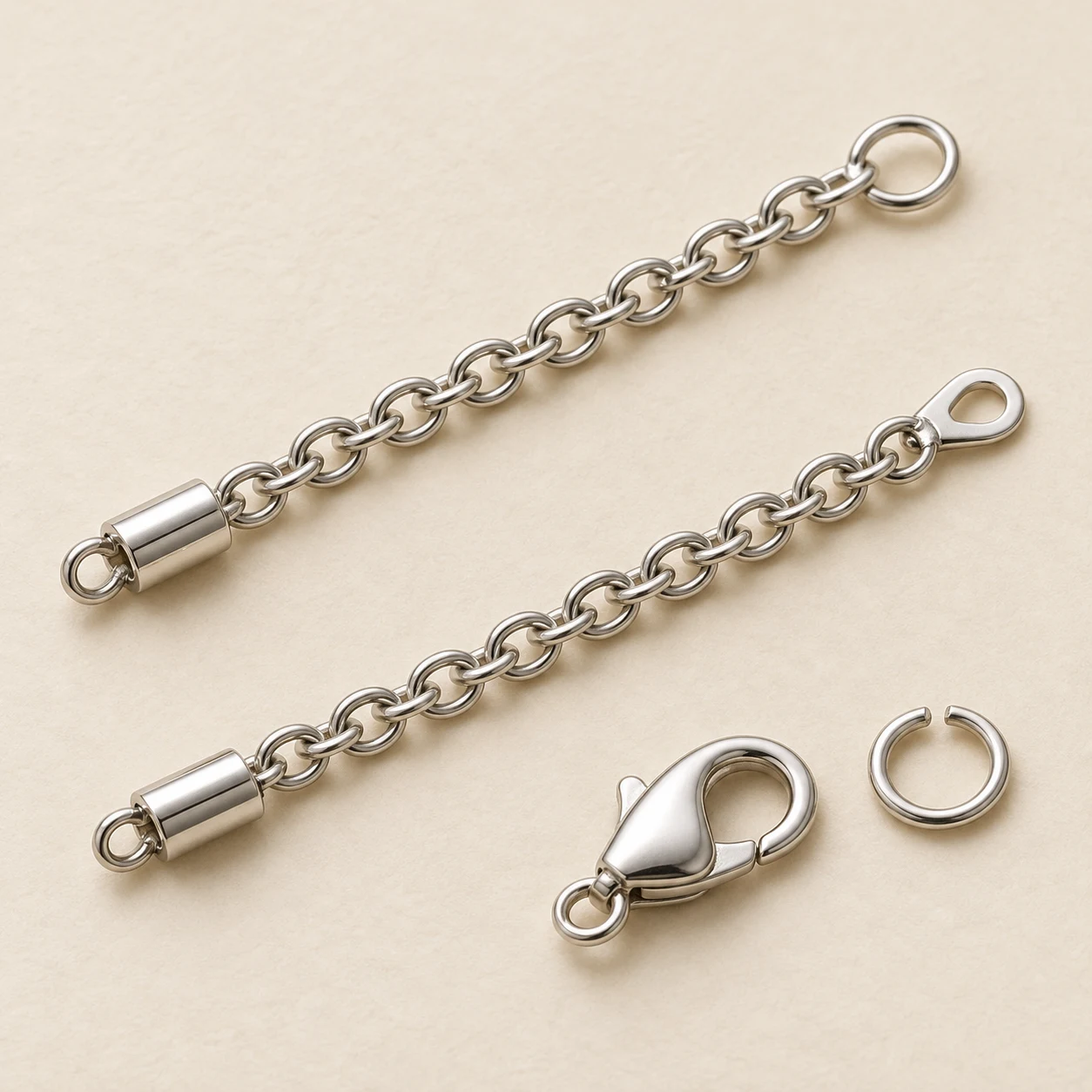
Chains provide linked structure; clasps open and close jewelry. Check chain ends, clasp attachments and connectors as one system, including dimensions, opening style and joining method.
Jump Rings, Split Rings, Extenders and Connectors
Jump rings join parts; open rings have an adjustable gap. Split rings use overlapping coils. Extenders add length adjustment. Connectors join elements. Confirm dimensions, opening style and fit rather than relying on names.
Earring, Necklace, Bracelet and Ring Components
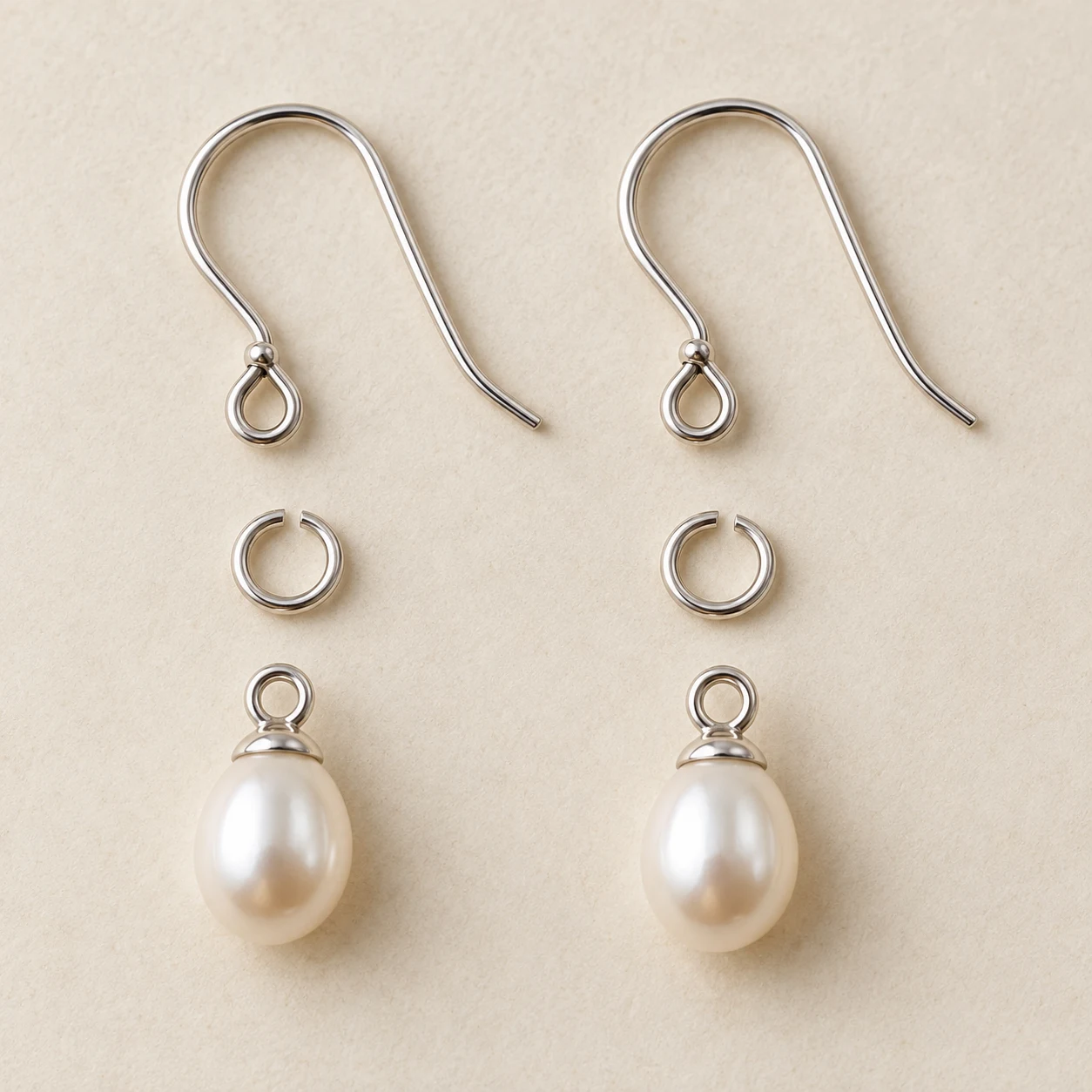
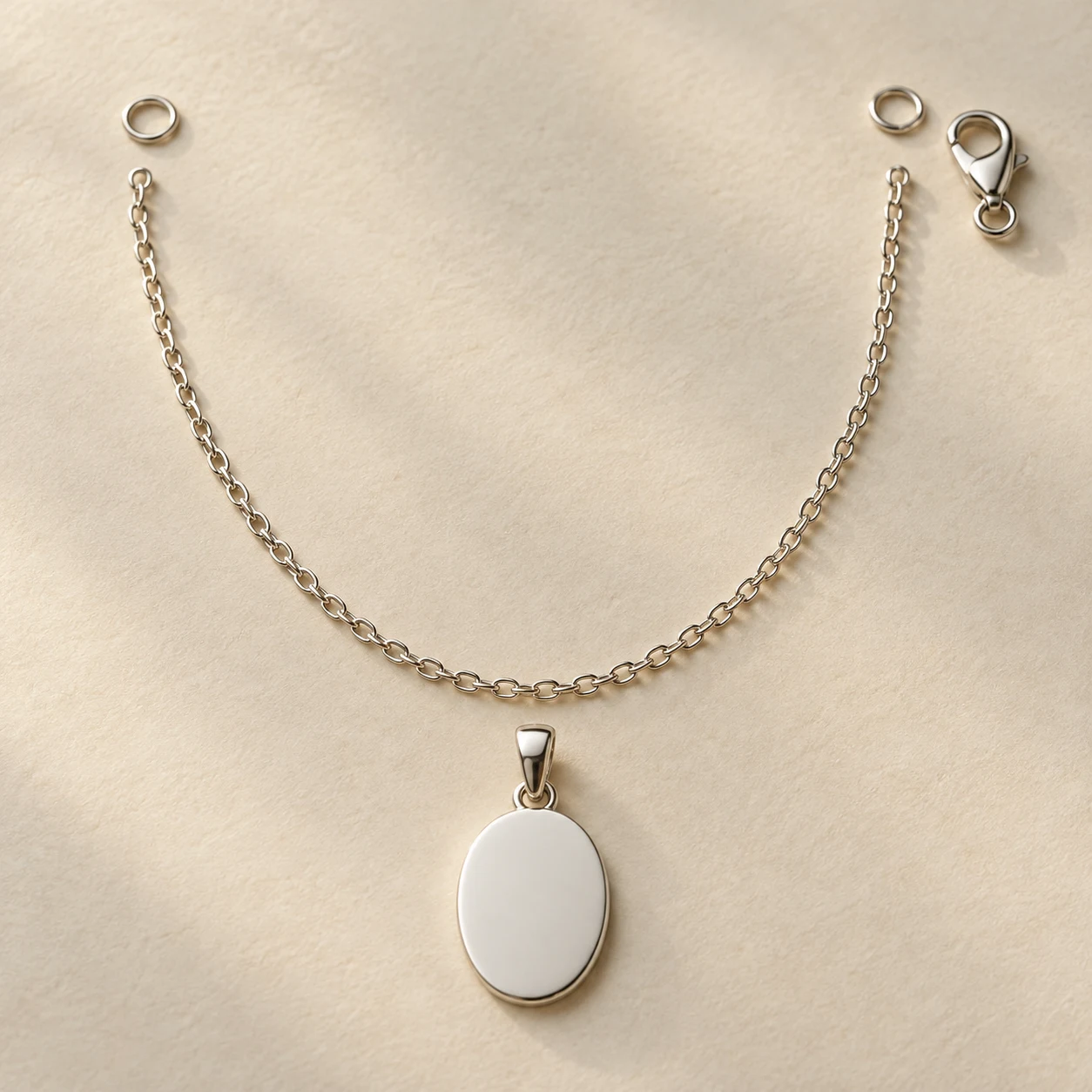
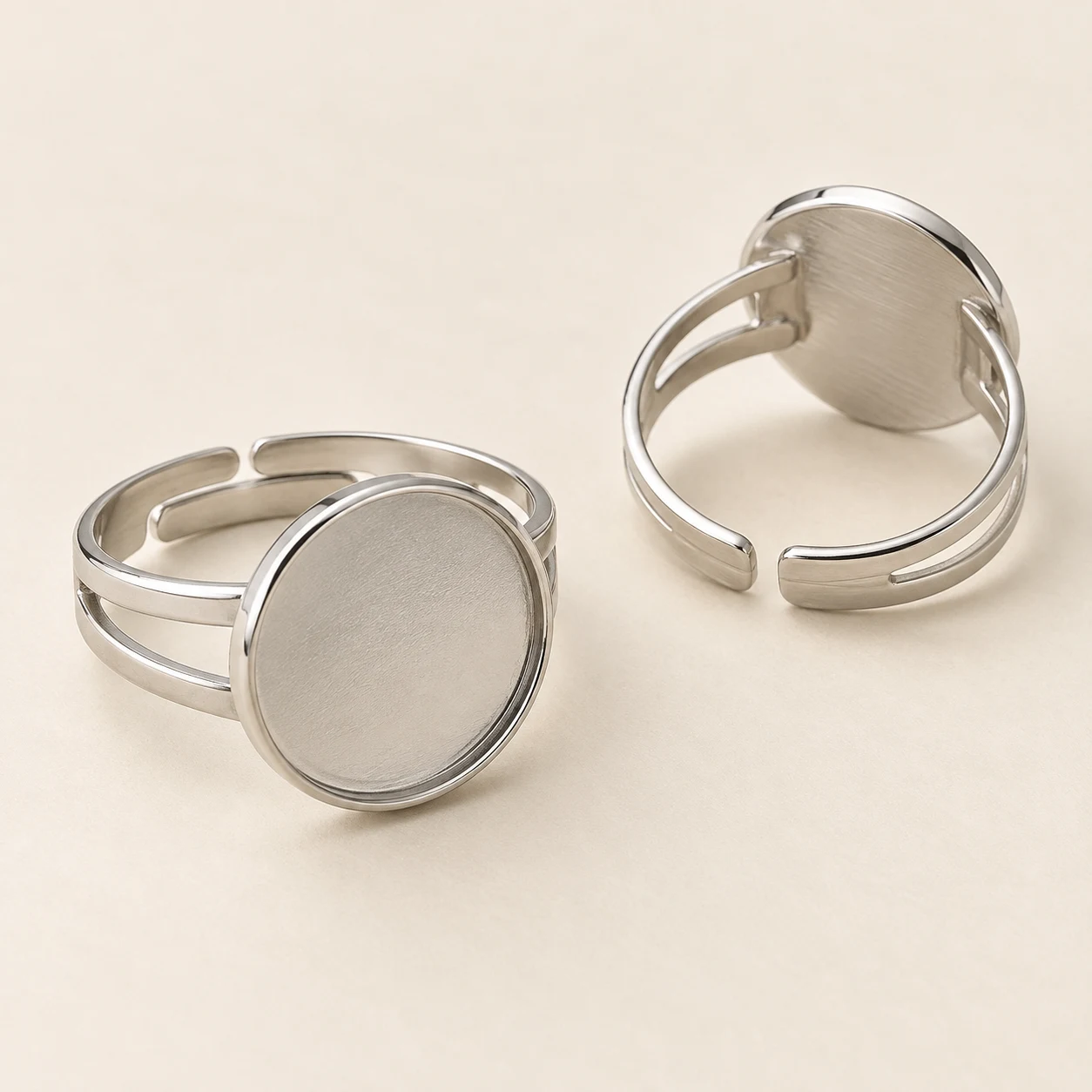
Build lists by finished piece:
- Earrings: ear attachment, connection and decoration.
- Necklaces: chain, clasp, connectors, pendant and finished length.
- Bracelets: structure, decoration, closure and length.
- Rings: band, size, setting and stone dimensions.
Confirm part availability and compatibility.
Component Set Versus Finished Jewelry
A category groups similar parts; a coordinated set serves one design; finished jewelry is assembled. State whether your set should arrive loose or assembled, and confirm assembly scope.
Cabochons, Gemstones, Crystals and Settings

Cabochon describes a smooth, rounded cut; gemstone describes material used as a gem and may have different cuts. Crystal and pearl describe different material categories. A setting holds or frames an element. Verify shape, dimensions, structure and attachment method; nominal size does not establish fit.
Setting, Mounting, Bezel and Prong Terms
A setting holds or frames an element; a mounting supports it and may mean the same thing. A bezel uses a surrounding rim; prongs project to retain the element. Verify the actual structure and fit.
Material, Color and Finish Terms
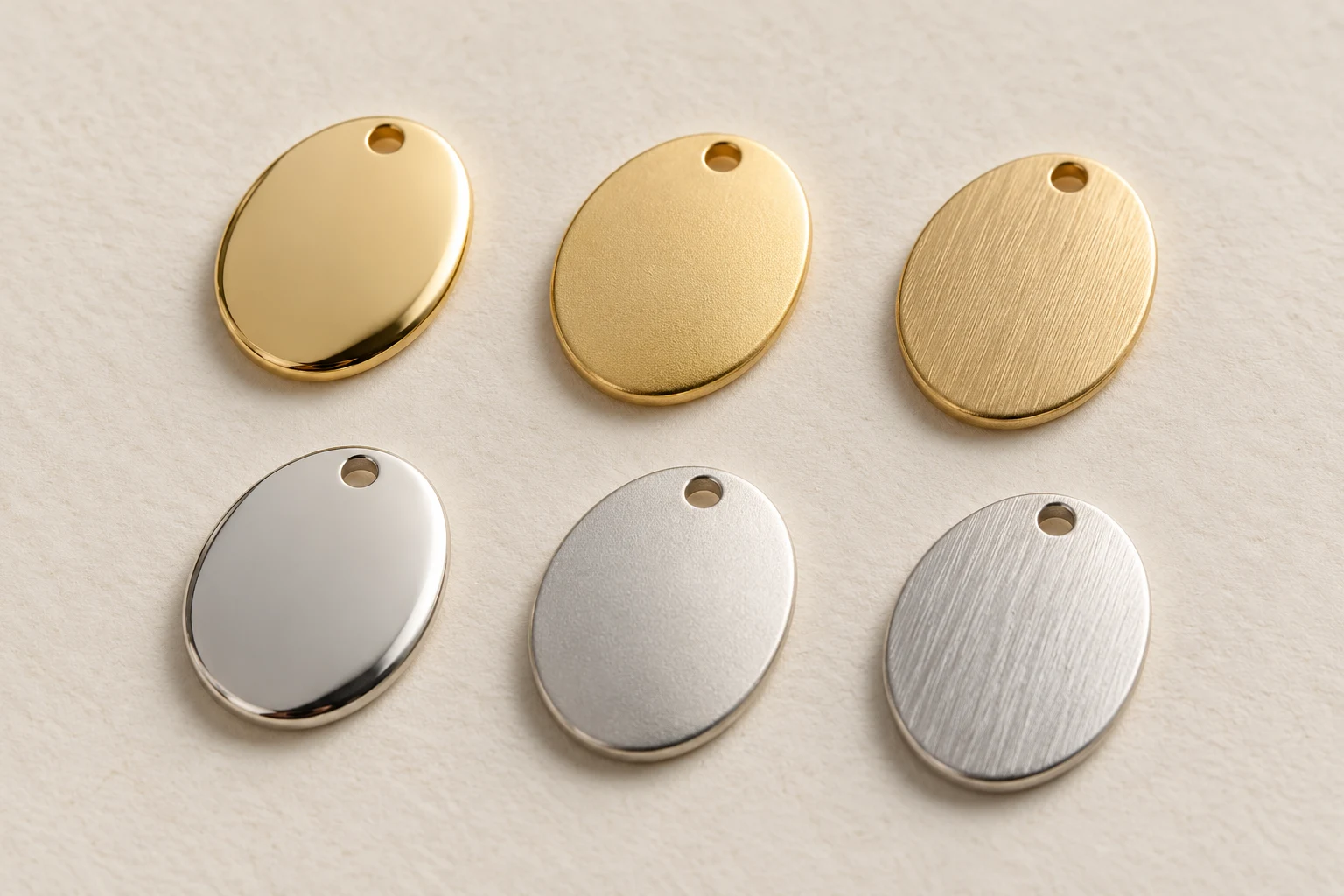
Material describes composition; color describes appearance. Finish or treatment describes the surface; plating adds a layer over a base. Color alone identifies neither base nor plating. Confirm the actual material and finish options.
What to Confirm for Material-Related Terms
For the intended use and market, confirm:
- Base material and composition.
- Surface treatment, plating and finish.
- Dimensions and tolerances.
- Skin-contact requirements.
- Relevant tests and documentation.
Verify these details for the specific item before ordering.
How to Use Glossary Terms in a Component Inquiry
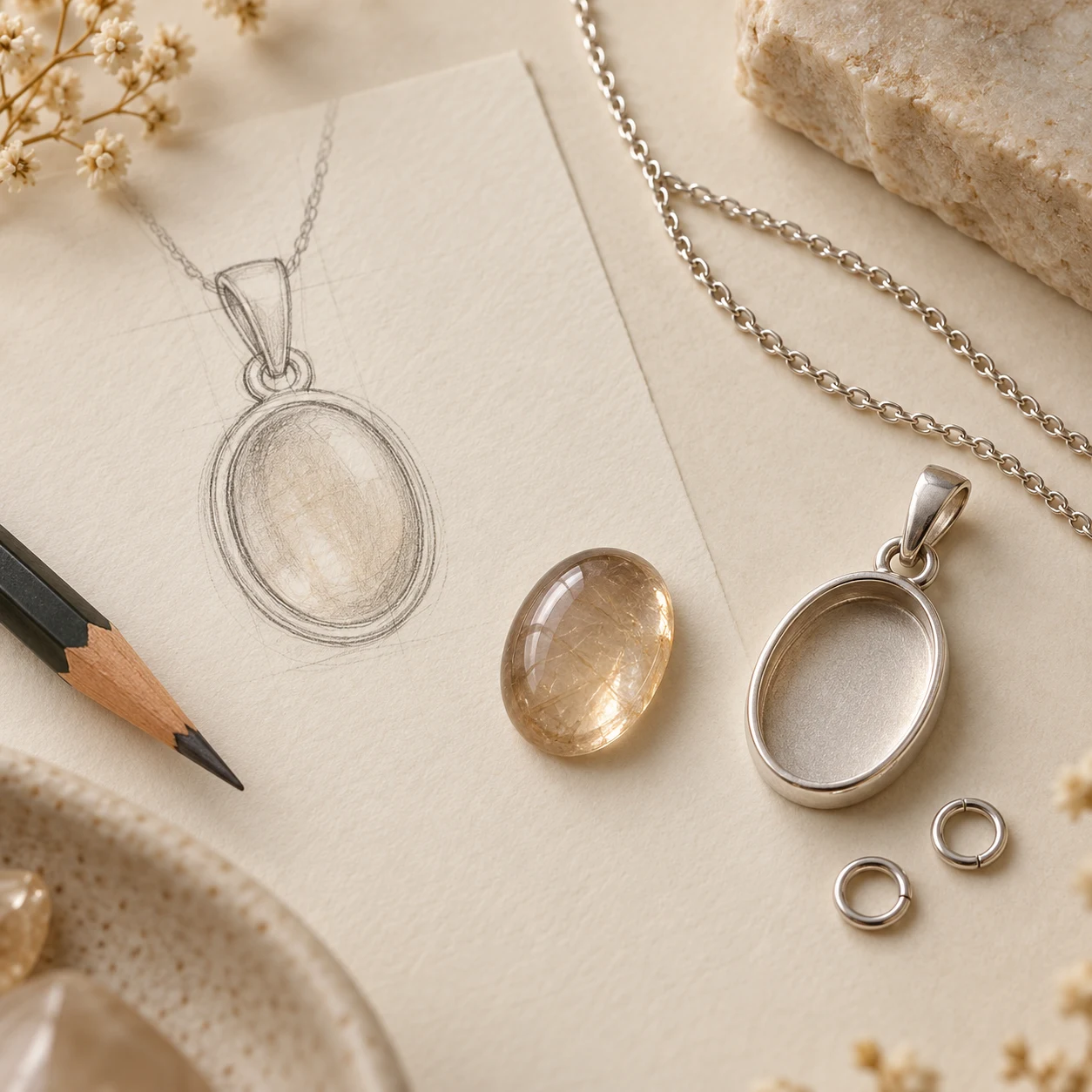
List part names and functions, references, materials and finishes, dimensions and attachments, quantities, use, fit, packaging and market needs. For several categories, confirm sourcing scope; use a project brief for design-led work.
When a Term Is Not Specific Enough
Describe an unfamiliar part’s function and position. Add a photo, sketch, BOM or sample reference; upload files for a document-led review.
Find the Right Component or Project Route
Browse components, compare services, request a quote for a defined list or discuss unclear terminology and scope with sales.